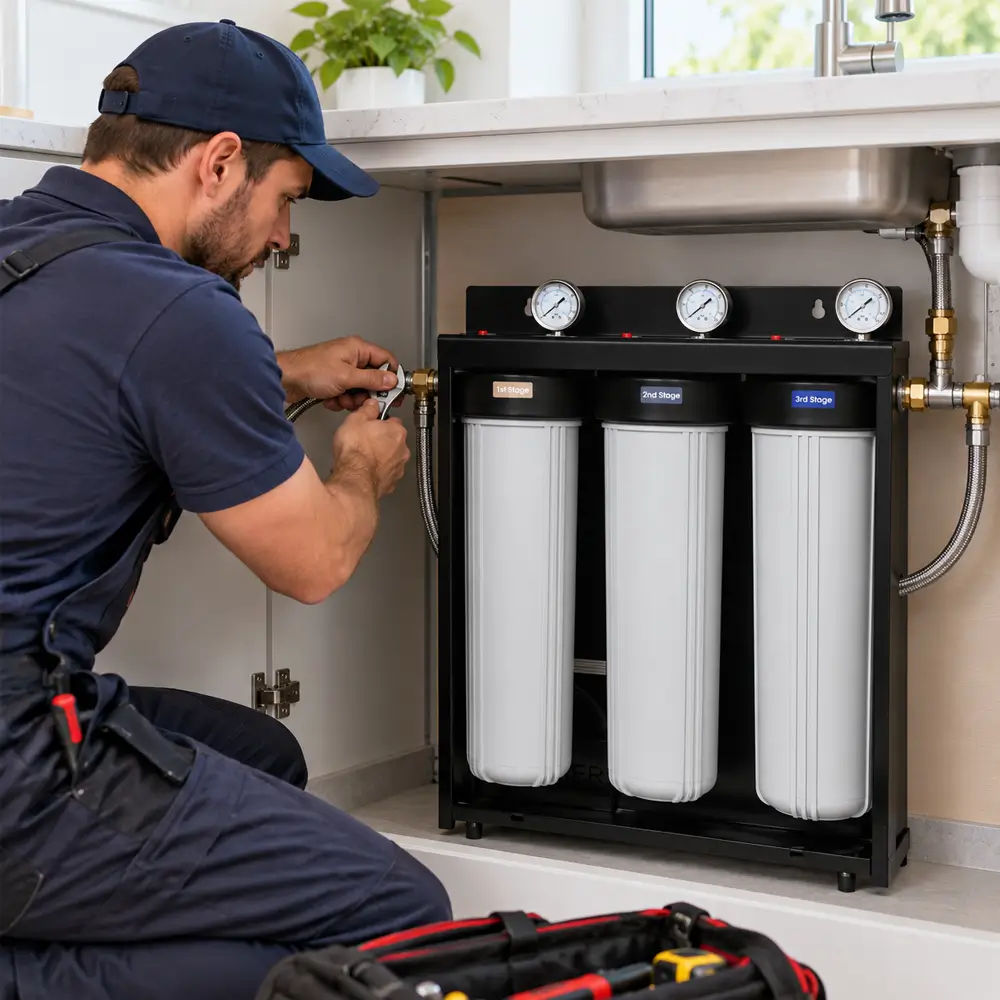
Stage 1: 10 micron antibacterial sediment filter.
Traps sand, silt, rust and fine particles. It also protects the two carbon stages so they last longer.
PureLine fits a whole house water filtration system to your main water line, so every tap, shower and appliance in the house gets filtered water. Our standard system is a triple-stage unit that cuts chlorine by more than 95%, traps sediment and rust, and is installed by a licensed plumber.
We're based in Clyde North, Victoria. Book a free in-home assessment and you'll get a fixed written quote before any work starts.
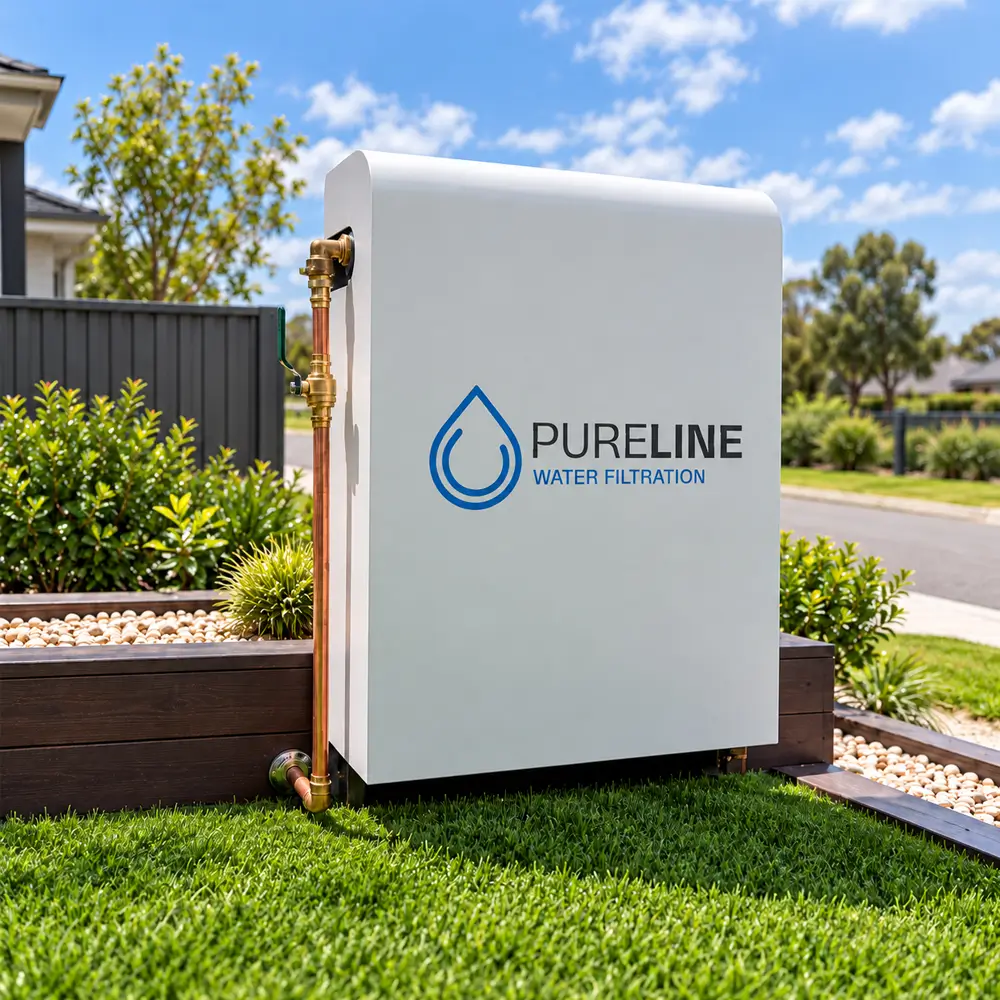
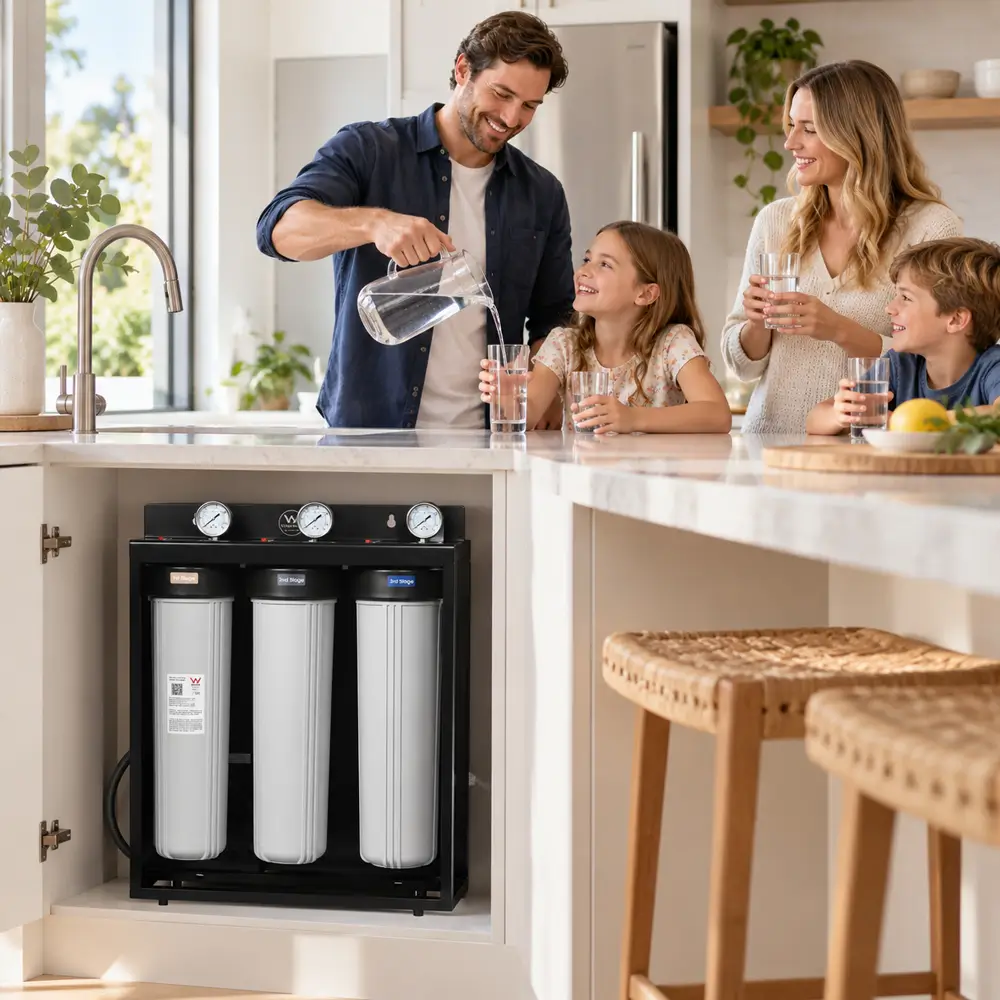
A whole house water filtration system, sometimes called a point-of-entry filter, connects to the cold water line where it enters your property. It filters the water before it splits off to the kitchen, bathrooms, laundry and garden. An under-sink or benchtop filter only treats the water from one tap.
Mains water in Australia is safe to drink. It's treated under the Australian Drinking Water Guidelines, and chlorine or chloramine is added to keep it safe on the way to your home. The trade-off is a chemical taste and smell, plus that tight, dry feeling after a shower. Older pipes can also add sediment and rust along the way.
A whole house system deals with all of that at the point of entry. Your water was safe to begin with. It just ends up tasting, smelling and feeling better everywhere in the house.
Water passes through three 20" x 4.5" Big Blue cartridges in a row. Each stage catches something finer than the one before it.
Traps sand, silt, rust and fine particles. It also protects the two carbon stages so they last longer.
Reduces chlorine, chloramines, VOCs, pesticides, iron and some heavy metals, and helps limit limescale.
Polishes the taste and smell and picks up remaining chemicals and fine particles.
If your property has a specific problem, like heavy sediment from tank or bore water, we can add a pre-filter or a specialty cartridge. You'll find the full specifications on our Triple-Stage Whole House Water Filter page.
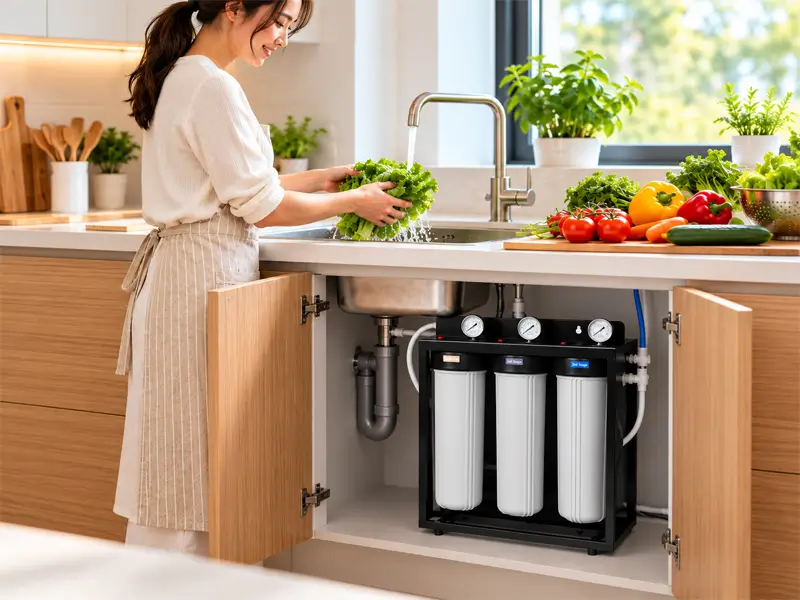
The chlorine taste and smell drop away. Tea and coffee taste cleaner, cooking water is fresher, and most households stop buying bottled water for the fridge.

Less chlorine in your shower water means less of that dry, stripped feeling after washing. A lot of people notice their hair is easier to manage too. A filter won't treat a skin condition, but it does remove one of the everyday irritants.
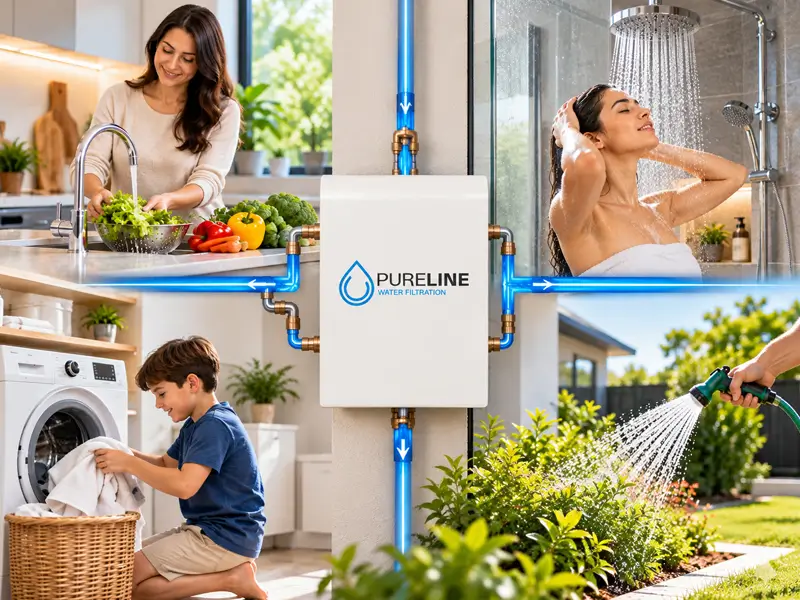
Sediment and scale are what wear out tapware, shower heads and hot water units over time. Filtering them out where water enters the property protects everything downstream, including your washing machine and dishwasher.
Read more on our Benefits of a Whole House Water Filter page.
It depends on what's bothering you. If you only dislike the taste of your drinking water, an under-sink filter may be all you need, and it costs less. A whole house system makes more sense when you want filtered water in the shower and laundry as well, when your home has older pipes, or when you're on tank or bore water.
| Whole house filter | Under-sink filter | Filter jug | |
|---|---|---|---|
| Taps covered | Every tap, shower and appliance | One kitchen tap | Whatever you pour |
| Filtered shower water | Yes | No | No |
| Protects appliances and plumbing | Yes | No | No |
| Installation | Licensed plumber | Plumber or DIY kit | None |
| Upkeep | Cartridges every 6 to 12 months | Cartridge every 6 to 12 months | Filter every few weeks |
Melbourne's water is naturally soft, so for most Victorian homes the main issues are chlorine taste and smell, plus sediment in older streets. Adelaide and Perth water tends to be much harder, which makes scale control more important. Homes on rainwater tanks or bores face a different set of risks again.
That's why we look at your water and your plumbing before we recommend anything.
PFAS are a group of man-made chemicals, often called "forever chemicals" because they break down so slowly. In June 2025 the National Health and Medical Research Council (NHMRC) tightened the Australian Drinking Water Guidelines. The limits are now 8 ng/L for PFOS, 30 ng/L for PFHxS and 200 ng/L for PFOA, plus a new value of 1,000 ng/L for PFBS.
The NHMRC says the vast majority of Australia's drinking water supplies are already below these levels. The higher risk sits with bore water near contaminated sites. If that's your situation, or you'd simply like an extra margin, talk to us about PFAS-rated filtration.
Call us or fill in the quote form.
Then you get a fixed written quote. No hidden fees.
usually every 6 to 12 months depending on your water and usage.
Our system is WaterMark certified and tested to AS/NZS 4020:2018, the standard for products in contact with drinking water. Every install follows AS/NZS 3500 and the Plumbing Code of Australia.
We come to you, assess what your home actually needs and put the price in writing. The quote you sign is the price you pay.
We keep track of your cartridge dates and let you know when a change is due. A cartridge swap takes about 5 to 10 minutes.
The system runs at water pressures from 0.2 to 0.8 MPa and temperatures from 5 to 38°C, which covers normal Australian mains supply.
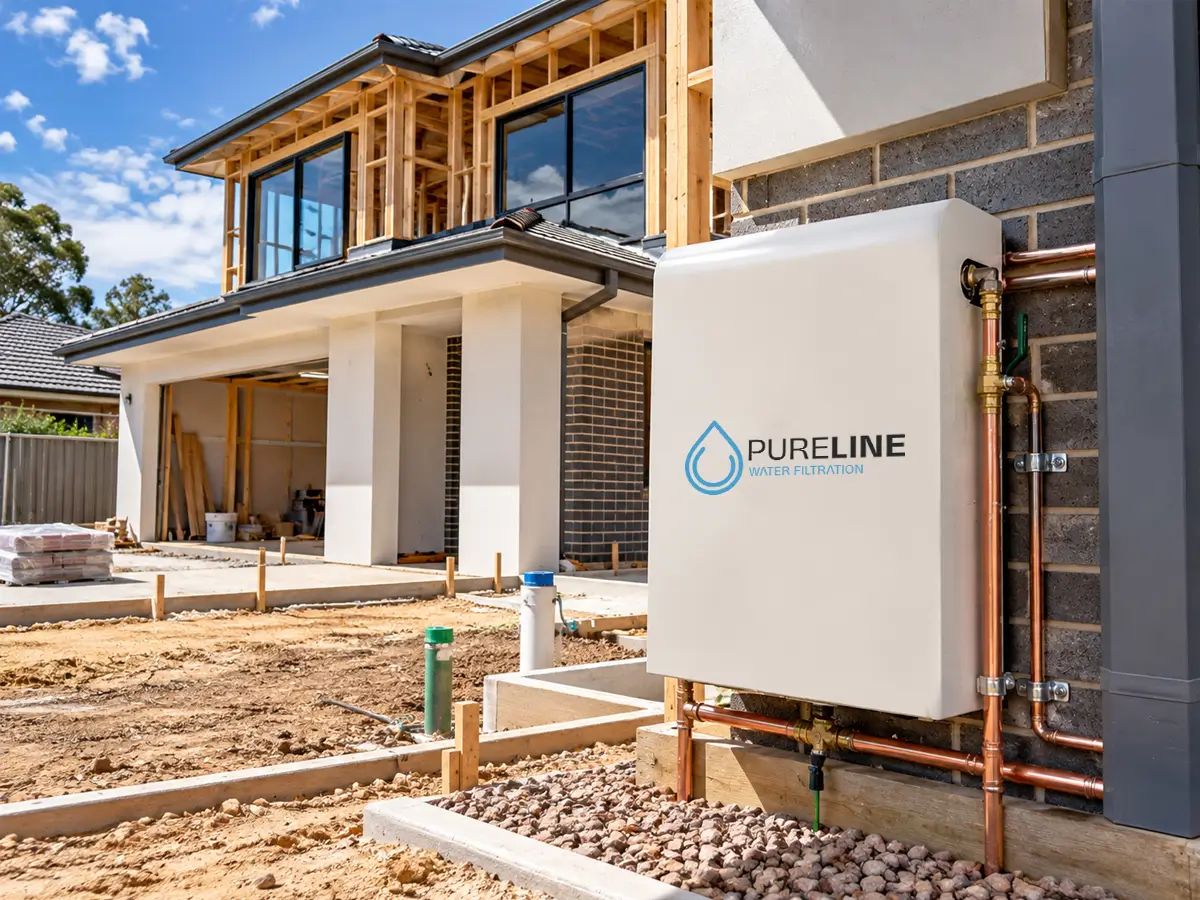
Adding whole house filtration at the build stage is simpler than retrofitting later, because the plumber can plan space on the main line from day one. It's also a feature buyers can taste and feel, not just read about on a spec sheet.
Want to sell and install PureLine systems in your area? Read about becoming a PureLine dealer.
The PureLine triple-stage system reduces chlorine by more than 95%, and cuts VOCs and pesticides by more than 90%. It also traps sediment, rust and silt, and reduces chloramines, iron and some heavy metals. It's designed to improve treated mains water rather than make untreated water safe to drink.
The system is rated for flows of around 30 litres per minute, which is enough for normal household use. Most homes won't notice a difference. Pressure can drop as cartridges fill up, which is usually the first sign one needs changing.
Every 6 to 12 months, depending on your water quality and how much you use. Each cartridge takes about 5 to 10 minutes to swap, and we'll remind you when it's time.
No. The standard carbon cartridges aren't designed to remove fluoride. If fluoride removal matters to you, ask us about other options.
The second stage helps limit limescale, but it isn't a salt-based water softener. In very hard water areas you may need a dedicated softener as well, and we'll tell you at the assessment.
No. Carbon filtration reduces chemicals and particles but leaves dissolved minerals like calcium and magnesium in the water. That's one of the differences between carbon filtration and reverse osmosis.
Yes. A whole house filter connects to your main water line, so Australian plumbing rules (AS/NZS 3500) require a licensed plumber. Our installs are all done by licensed plumbers.
It depends on your home, plumbing layout and whether you need extras like a pre-filter. Your assessment is free and the quote is fixed.
Tank and bore water often need an extra sediment pre-filter, and bore water should be tested first. The standard system is designed for treated mains water, not as a disinfection unit.
Our office is at 46 Palladium Circuit, Clyde North VIC 3978. We service, and our dealer network covers other regions.
Tell us what's bothering you about your water. We'll come out, check your setup and recommend the right whole house water filtration system for your home, with a fixed written quote. Call 1300 011 406 or send us a message.